ServicesFilter replacement and maintenance
Filter Replacement and Maintenance in Grapevine
Every filter system slows down as its cartridges fill up. We change the filters, clean the housings, check pressure and look over the whole setup. Your water keeps tasting right, and your showers and appliances stop fighting a clogged system.
A filter only works as well as its last change
Carbon eventually stops catching chlorine taste. Sediment cartridges load up with grit and start choking flow. Reverse osmosis membranes slow down until the little faucet takes forever to fill a glass. None of this happens overnight, so it's easy to miss.
We service the systems we install and most common brands already in your home. On each visit we swap the cartridges that are due, clean the housings, replace worn O-rings when needed and run a quick water check so you can see the system is doing its job.
There's a running-cost side too. A clogged prefilter means lower pressure everywhere downstream, and a softener set wrong can use more salt and water than your home needs. Keeping things tuned usually costs less than living with a tired system.
What we take care of on each visit
- Fresh cartridges where they're due
- Sediment, carbon and RO prefilters get swapped when your water use and the condition of the old cartridge say it's time. The date on the label is a guide, not the rule. If your whole-house carbon tank holds loose media and that bed is worn out, we refill it.
- Clean housings, sound seals
- A thin slimy layer can build up inside a housing between changes. Before anything new goes in, we drain it, scrub it and sanitize it. O-rings get lubricated, or replaced if they've flattened or cracked, so the housing stays dry once it's back under pressure.
- RO membrane reading
- A meter tells us how much dissolved material is getting through the membrane. When the reading shows it's losing ground, you'll hear it from us. When it's still performing, it stays put.
- Softener tune-up
- We see how much salt is left, look for a hard crust that keeps the pellets from dissolving and clear it if we find one. Then we set regeneration to match your measured hardness, because an overly aggressive setting burns through extra salt and water on every cycle.
- Pressure and leak check
- Gauges before and after a whole-house filter show how much pressure the cartridge is taking away. We also look over fittings, bypass valves and drain lines for slow drips.
- A written note for your records
- Before we leave, you get a short list of the parts we replaced, anything worth watching and a rough date for the next change.
Signs your system is overdue
Pressure dropped slowly
If showers feel weaker than they used to and the change crept in over weeks, a loaded sediment or whole-house cartridge is a common cause. It's usually an easy fix.
The chlorine taste is back
Spent carbon lets that pool-like taste and smell through again. It's the clearest sign the cartridge has done all it can.
The drinking faucet runs slow
A reverse osmosis faucet that crawls often means clogged prefilters, a tired membrane or low air pressure in the storage tank. We check all three.
Softener salt acts strange
Salt that never goes down can mean a bridge in the brine tank. Salt that disappears fast can mean the softener regenerates more often than your water needs.
Nobody remembers the last change
Long North Texas summers push water use up, and filters work harder for it. If no one has touched yours in a year or more, it's worth a look.
What moves the cost of maintenance
Most visits are routine, and once we know your equipment we can walk you through the likely scope on the phone. What you pay reflects the parts and time your particular setup needs. Parts that still have useful life stay in place.
The number of units we service
Changing one drinking-water unit under the sink takes less time and fewer parts than servicing a whole-house filter, an RO system and a softener on the same trip.
Standard or proprietary cartridges
Plenty of systems use common cartridge sizes that are easy to source. Others only accept parts made for that one brand, and those tend to run higher.
Membrane or media replacement
Prefilter swaps are routine. Replacing an RO membrane or a tank of carbon media is a bigger line item, so we only suggest it when a reading backs it up.
Condition and access
Cracked housings, brittle tubing or a stuck valve add time and parts. So does a system squeezed into a tight cabinet or mounted in a hot garage.
How the visit goes
- 1
A short phone conversation
Tell us what system you have, about how old it is and what you've noticed. We'll ask for the brand and model if you can find them so we bring the right cartridges.
- 2
Shutoff and look-over
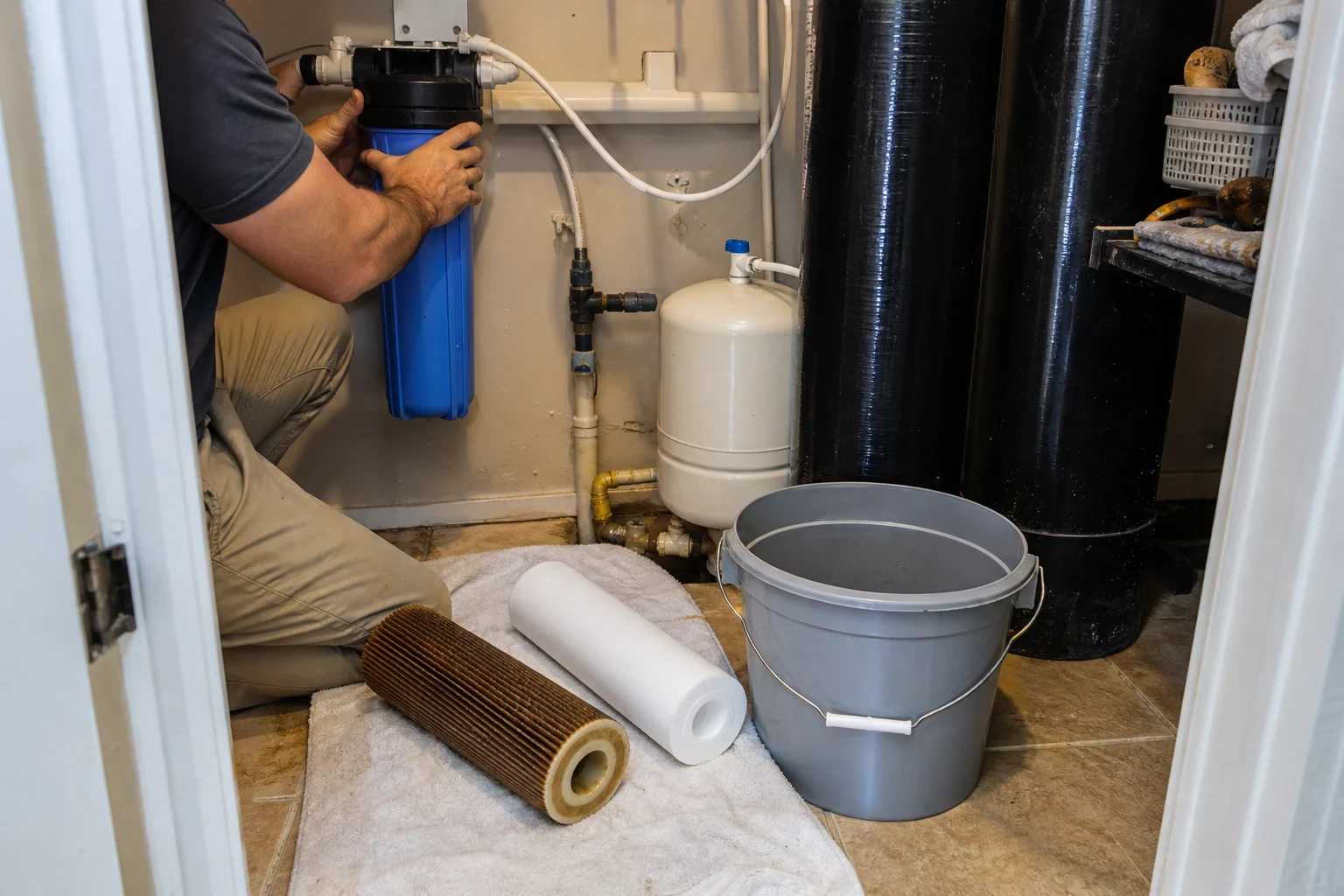
At your home we shut off water to the system, relieve the pressure and inspect housings, tubing and valves before anything comes apart. Towels and a bucket go down first.
- 3
Change, clean and reassemble
Old cartridges come out, housings get cleaned and new filters go in with fresh or lubricated O-rings. On a softener we clear the brine tank and adjust settings if they're off.
- 4
Test and walk-through
We turn the water back on, purge air and carbon fines, check for leaks and take a quick reading. Then we show you what came out and let you know when we'd expect the next change.
Filter maintenance questions
How often should my filters be changed?
Each type of filter wears at its own pace, and a busy household goes through cartridges faster than a quiet one. Sediment prefilters can need a swap every few months. Carbon cartridges and RO prefilters commonly go about a year, and membranes or loose carbon media last longer than that. We base your schedule on how the old cartridges actually look when they come out.
Can you service a system you didn't install?
Usually, yes. We work on most common brands of whole-house, under-sink and softener systems. If a part is hard to find for an older unit, we'll tell you up front and explain your options.
Does keeping up with maintenance lower running costs?
It can. A fresh prefilter lets water move freely, so pressure holds up at every tap. A softener matched to your actual hardness skips needless regeneration, which saves salt and water. Spent carbon swapped on time also keeps the parts behind it from straining.
Can I change the cartridges myself?
Lots of people handle their own swaps, and we're glad to walk you through it on your system. We're most useful for housings that won't budge, membrane readings, softener settings and catching worn parts or small leaks that are easy to overlook.
Will we be without water during the visit?
Only briefly, and often not at all. Whole-house filters usually have a bypass valve that keeps water flowing while we work. Under-sink units only affect the drinking faucet.
What if the problem is bigger than a filter change?
A new taste, smell or tint can mean something has changed in the water itself. When that happens we may recommend water testing first, so you don't spend money on a part that won't solve it.
Ready for a fresh set of filters?
Give us the make of your system and a quick rundown of what's changed. We'll describe what the service will likely include and pick a visit time that suits your week.