ServicesWhole-house carbon filtration
Whole-House Carbon Filtration in Grapevine
When a glass of water smells faintly of bleach and a hot shower leaves your skin dry, the usual cause is the chlorine added to keep city water safe. We test your water, size a carbon system to your home's flow and fit it on the main line so every faucet benefits.
What a whole-house carbon system does for your home
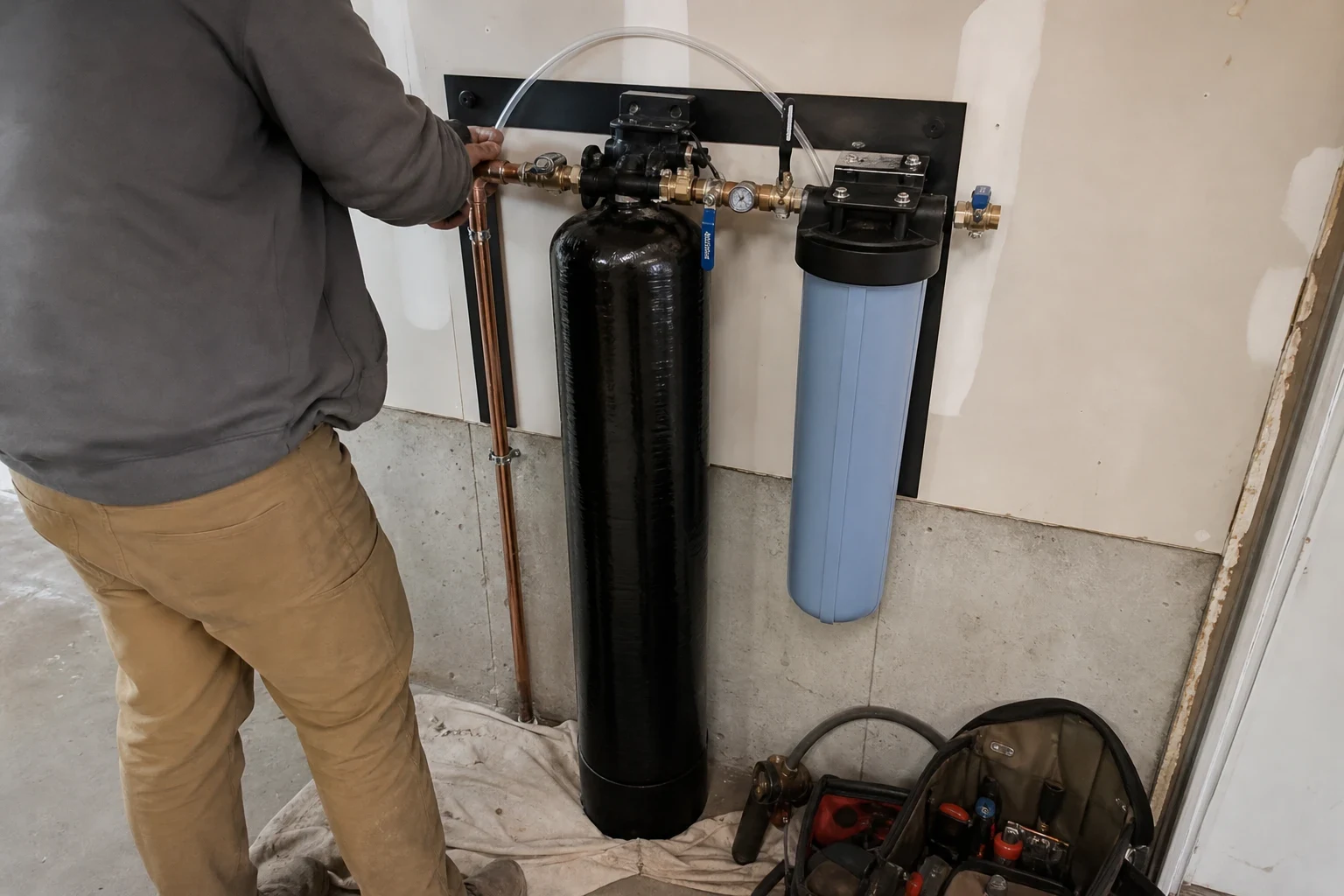
Cities disinfect water with chlorine or chloramine so it stays safe through miles of pipe. That protection is worth having, but the flavor and odor travel with it all the way to your glass. A whole-house carbon system is installed on the main supply, just after it comes into your home, and strips those disinfectants out before the water splits off to faucets, showers and appliances.
Unlike a pitcher or a faucet filter, it covers everything at once: the kitchen, the bathrooms, the laundry and the ice maker. Most systems we install need no salt and no drain, and many run without electricity, so the monthly running cost is close to nothing beyond eventual media replacement.
It is the right call when your main complaint is taste, odor or dry skin after showering. If you are worried about lead from older pipes or want extra-pure drinking water, under-sink reverse osmosis is usually the better fit, and we will tell you so.
What comes with your installation
- Testing comes first
- We measure chlorine, flow and pressure at your home to learn what the system must handle. If the results point to iron or hardness instead, you'll hear that before buying the wrong equipment.
- Carbon matched to your water
- Standard activated carbon handles chlorine easily. Chloramine is harder to remove and needs catalytic carbon with longer contact time, so your test sets both the media type and the tank size.
- Sized to keep your pressure up
- A tank that's too small restricts flow, so the shower weakens when another tap opens. We size for your bathrooms and busiest times, which holds pressure steady and helps the carbon last.
- Prefilter for sediment
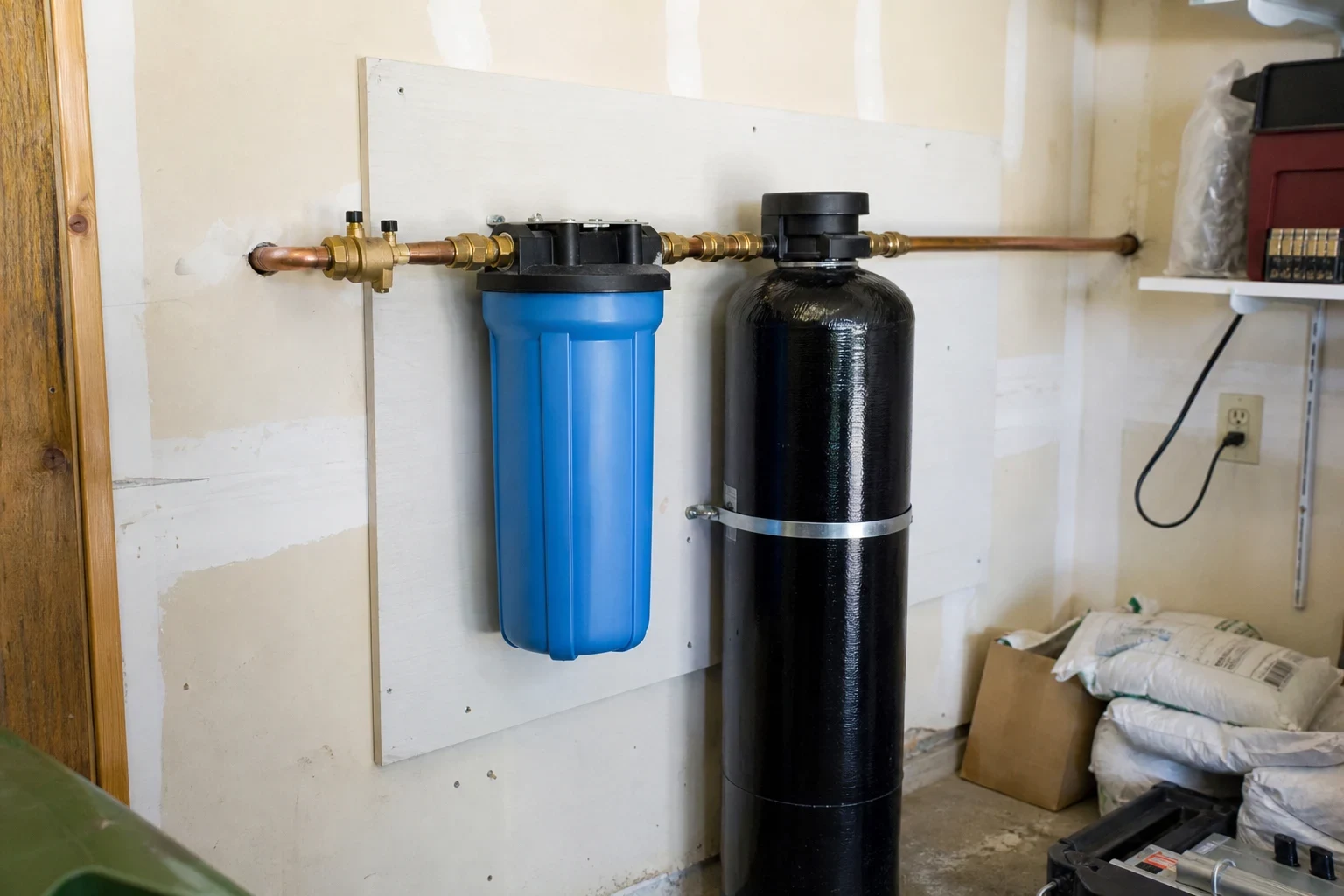
- A basic prefilter stops grit before it gets to the carbon. The main media lasts longer, and you spend less on replacements over time.
- Bypass valve and a tidy job
- A bypass lets the system be serviced while the rest of the house keeps water. We cover nearby floors and walls and take packaging and old fittings away when we finish.
Signs a whole-house carbon filter would help
Your water smells like bleach
A chlorine smell at the kitchen sink or in a steamy shower is the most common reason people call us. Carbon is very good at removing it.
You buy bottled water for taste alone
If your water is safe but you still won't drink it, filtering at the main line can cut that recurring cost and the plastic that comes with it.
Dry skin or brittle hair after showers
Many people notice their skin feels less tight once chlorine is out of the shower water. It is a comfort change you feel every day.
Coffee, tea and ice taste off
Chlorine flattens the flavor of drinks and gives ice cubes a faint chemical note. Filtered water fixes the problem at every outlet, including the fridge line.
You have several point-of-use filters to keep up with
Swapping cartridges on faucets, shower heads and pitchers adds up. One system with one service schedule is simpler and often cheaper over time.
How installation day goes
- 1
Test and plan
First we test your water and find the spot where the supply line enters your home, commonly a garage wall or the area by the water heater. You then get a written estimate that lists equipment and labor line by line.
- 2
Prepare the space
We protect the floor, shut off the water briefly and set the tank on a level base. Most installs leave room for a technician to reach the bypass and prefilter easily later.
- 3
Plumb it in
We cut into the main line, add the bypass valve and connect the prefilter and carbon tank. New carbon gets flushed until the water runs clear, so the first glass you pour tastes right.
- 4
Walk you through it
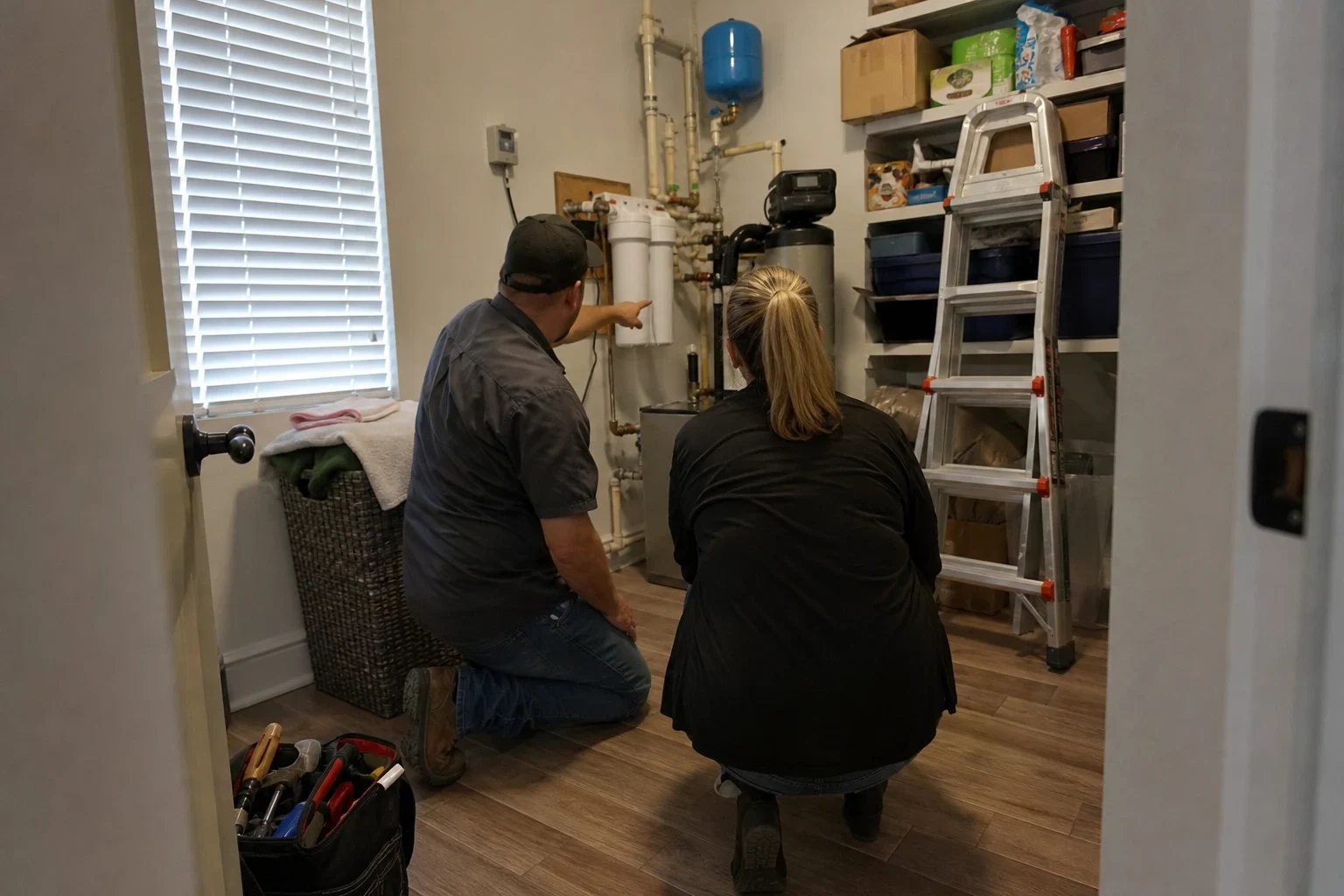
Before we leave, we show you the bypass, explain when the prefilter needs changing, and check pressure at a couple of taps with you. Water is usually off for only a few hours.
What changes the price
Two houses on one street can need different systems, so we quote only after testing your water and seeing where the system would go. You get an itemized written estimate showing where each dollar goes before you choose. These are the main things that shift the total.
- Number of bathrooms
- A three- or four-bathroom home draws more water at peak times than a smaller house, so it needs a larger tank with more carbon. The upfront price goes up, but pressure stays even and media changes come less often.
- Chlorine versus chloramine
- Catalytic carbon for chloramine is pricier than standard carbon and often calls for a larger tank to get enough contact time.
- Where your main line comes in
- An exposed garage wall goes quickly. A line behind finished drywall or in a cramped utility closet needs more time and fittings.
- Prefilter and extras
- A sediment prefilter costs little and protects the bigger purchase. Adding under-sink reverse osmosis for drinking water raises the total.
- Media costs over the years
- The carbon gets replaced every several years, depending on your water and how much you use. We lay out the likely schedule at the start, and our filter replacement and maintenance service can do the change when it's due.
Questions about whole-house carbon filtration
Something not covered here? (817) 687-1488
Will a whole-house filter make my shower weaker?
Not if the tank is the right size. Noticeable pressure loss almost always traces back to a system that is too small for the home. We measure your flow and plan for your busiest moments, such as a shower running while the dishwasher fills.
Does it use electricity or salt?
Most carbon systems we install use no salt and no drain line, and many need no power at all. Some backwashing models use a small control valve that draws very little electricity. We explain which type fits your home and what each costs to run.
Does it remove lead or make water softer?
Carbon is chosen mainly for chlorine taste and odor. It is not a water softener, and for lead from older plumbing we usually recommend under-sink reverse osmosis at the kitchen tap. A water test tells us which, if any, you actually need.
How often does the carbon need replacing?
It depends on your household's water use and how much disinfectant is in the water. Many systems go several years between carbon changes, while the sediment prefilter is changed more often. We give you a realistic schedule after testing, not a guess.
Will my water still be safe without the chlorine?
Chlorine does its job on the way to your home. Once water passes through the filter it is used within a short time, and the plumbing stays pressurized. If the house sits empty while you travel, run the taps for a minute when you get back.
See how a carbon system would change your water
Let us know what you dislike about your water, and we'll book a test and give you a written estimate. We work in Grapevine and nearby towns including Southlake, Colleyville and Coppell.