ServicesWater softeners
Water Softeners in Grapevine, Sized After a Hardness Test
Before we suggest any equipment, we measure how hard your water really is. A softener only goes in when that number calls for one. Then we size it to your home, install it neatly and set it to run on the least salt and water it can.
Test first, then decide
A softener pulls calcium and magnesium out of your water. Those minerals leave chalky rings around faucet bases, a dull film on drinking glasses and a hard layer of scale inside your water heater. It won't change chlorine taste, and it isn't a drinking water filter. So we begin with a hardness test and share the reading with you before equipment ever comes up.
When the reading is high, softening pays you back in quiet ways. Scale acts like insulation, so a tank water heater coated in it uses more gas or electricity to heat the same water, and tankless units need descaling more often. Soft water also lets soap and detergent do their job at smaller doses.
When the reading is low, we will tell you a softener is not worth the money and point you toward something that fits your actual concern, like whole-house carbon filtration for taste and odor.
What a softener installation includes
- Hardness and iron reading
- Our test reports hardness in grains per gallon and also looks for dissolved iron. Iron affects which softener fits and how quickly the resin wears out, so it helps to know up front. The results are yours to keep in writing.
- Sizing to your household
- Capacity is based on your hardness reading, how many people live in your home and your peak water use. A properly sized unit regenerates only when it needs to, so it does not waste salt and water on a fixed schedule.
- Metered regeneration setup
- We program the control valve to track the gallons you actually use. That keeps salt purchases and backwash water down month after month.
- Bypass valve and drain
- We install a bypass so you can take the softener out of the loop without losing water to the house. The brine drain line is routed with a proper air gap.
- Startup and walkthrough
- We load the first bags of salt, run a regeneration and test softened water at a tap. Then we show you how to check the salt level and what to do before a long trip.
Signs your home may have hard water
Crust on fixtures
White or chalky buildup on showerheads, faucet aerators and the rims of drains, often coming back within weeks of cleaning.
Spotted dishes and cloudy glass
Glasses come out of the dishwasher with a film, and glass shower doors stay hazy no matter what cleaner you use.
Noise from the water heater
A tank that pops, crackles or knocks while heating often has a layer of mineral scale on its floor. Heat has to pass through that crust before it reaches the water, so every cycle burns a little more energy.
Soap that barely lathers
Shampoo, hand soap and laundry detergent seem to need extra to work, and towels come out stiff.
Worth confirming
Some of these signs have other causes, like iron or a failing fixture. A quick test tells us which problem you really have before you spend anything.
How the work goes
- 1
Hardness test at your tap
We test water straight from your plumbing and go over the reading with you. If softening is not needed, the conversation ends there with no pressure.
- 2
Written recommendation
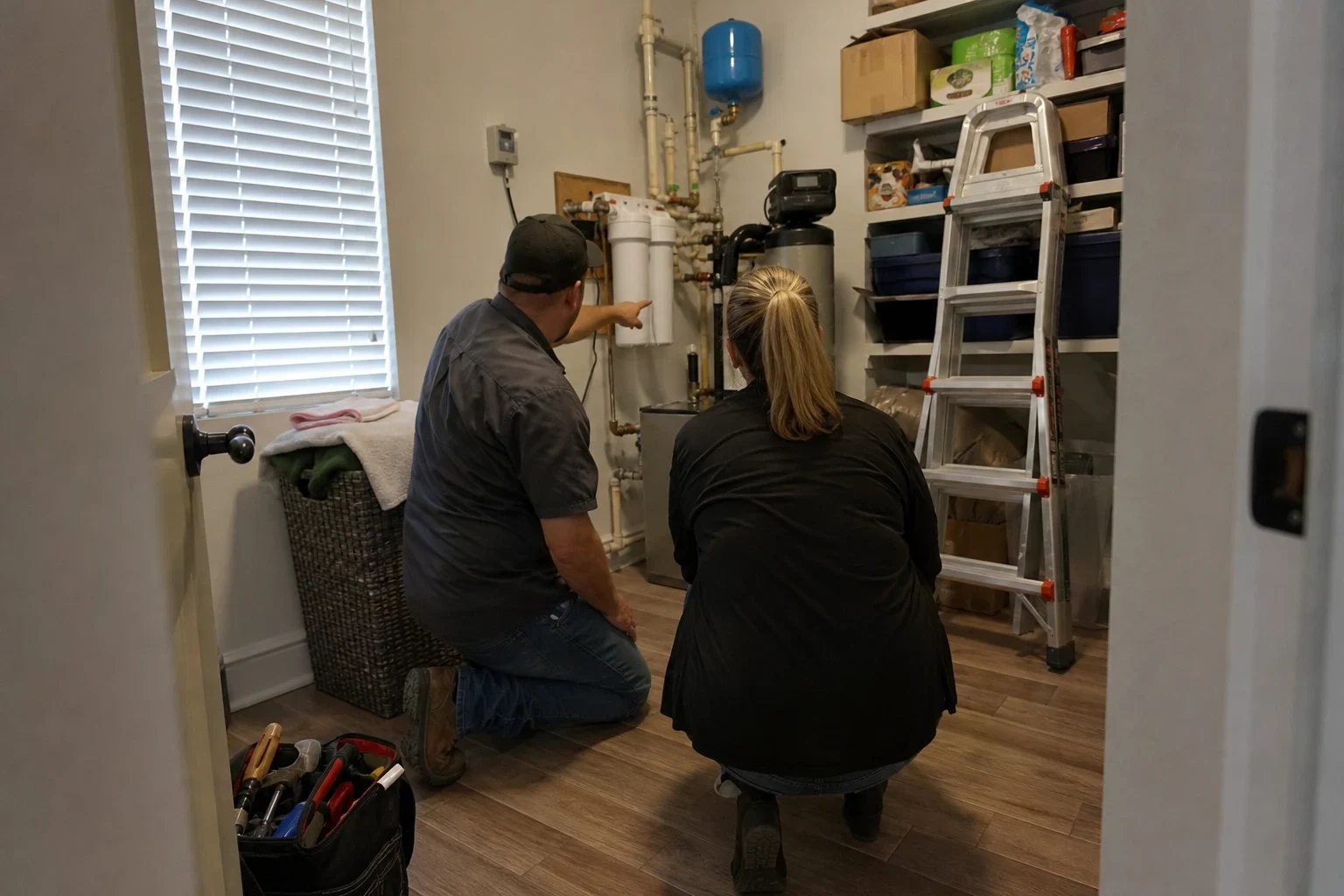
When a softener is warranted, we put it on paper as a line-item estimate covering the unit size, any pre-filter and the installation labor. You can look it over at your own pace, and nothing gets added later.
- 3
Installation day
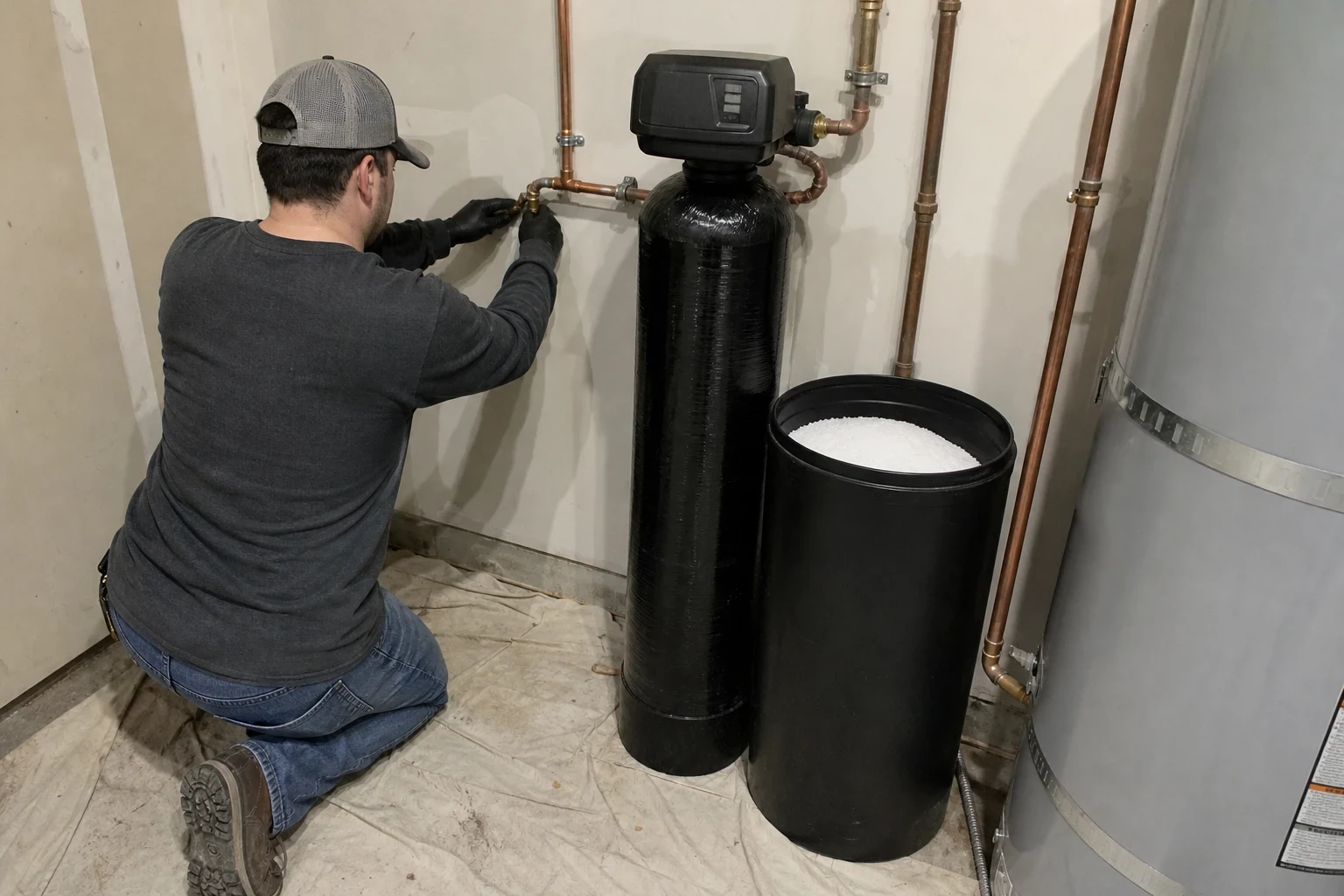
Softeners usually go where the main line enters or near the water heater, often in the garage. We protect the floor, shut off the water for part of the visit, plumb in the unit and bypass, and connect the drain and power.
- 4
Testing and handoff
We program regeneration, run a test cycle and check the softened water again. You see the before and after readings and know exactly how to look after the system.
What affects the price of a softener
No two installations cost quite the same, because the price follows your water and your plumbing. We explain each item on the written estimate before any work starts. Running costs matter too, so we talk through salt use as well as the upfront figure.
- Your reading and your household
- The resin tank needs enough capacity for your mineral load and daily use, so a bigger family on harder water calls for more resin. Go too big and you pay for capacity you never touch. Go too small and the unit regenerates constantly.
- Plumbing access
- Some homes have a softener loop already roughed in. Others need new pipe run to the main line, plus a drain and an outlet nearby, which adds labor.
- Pre-filtration
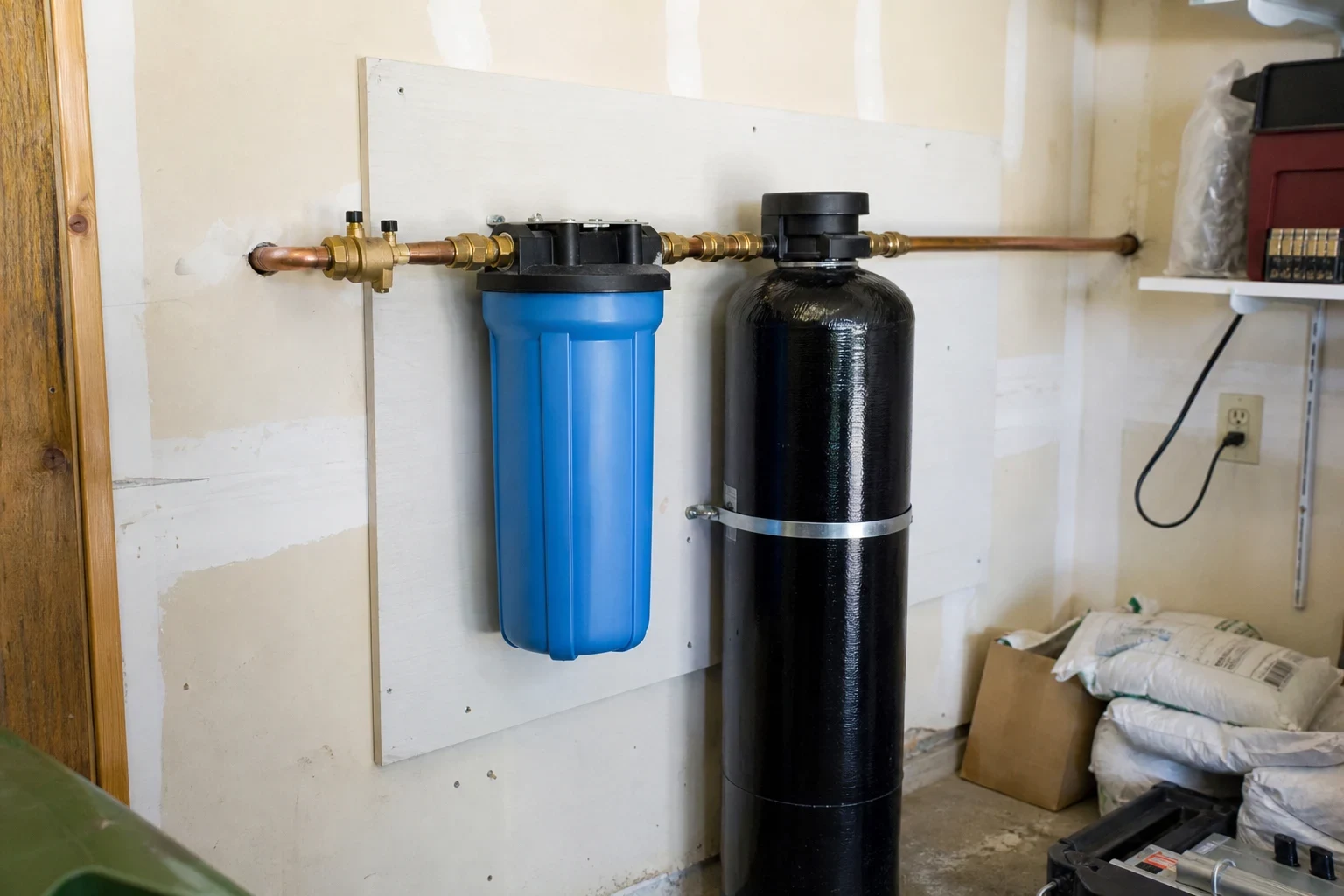
- Chlorine can wear down softener resin over time, and iron or sediment can foul it. If your test shows either, a carbon or sediment pre-filter may be part of the setup.
- Valve and salt efficiency
- A metered, demand-based valve costs a bit more than a basic timer model, but it uses less salt and water for as long as you own the system.
Water softener questions
Something not covered here? (817) 687-1488
Do homes in Grapevine need softeners?
That depends on your own water, and we don't guess. Hardness varies, and older plumbing can change what reaches your faucet. Testing gives you an actual number to base the decision on.
Can a softener reduce my energy bills?
With hard water, a softener stops scale from collecting in the water heater, so the heater keeps its efficiency rather than gradually losing it. The savings depend on your hardness and how much hot water you use. With soft water, there's no energy gain, and we'll tell you that.
Can I drink softened water?
For most people, yes. Softening adds a little sodium, about in line with how hard the water started out. If you limit sodium, an under-sink reverse osmosis system at the kitchen sink takes most of it out, or the softener can use potassium chloride in place of salt.
Does a softener take out chlorine or lead?
No. A softener just trades hardness minerals for sodium or potassium. For chlorine taste and smell, whole-house carbon filtration is the answer, and drinking water concerns like lead from older pipes are best handled with under-sink reverse osmosis.
How much work is a softener to own?
Very little. Check the brine tank and add salt when it gets low, which depends on your hardness and water use. Every so often, poke a broom handle into the salt to be sure no hard bridge has formed above the water. Resin lasts for years when kept free of chlorine and iron, and our filter replacement and maintenance visits can cover the routine if you'd like.
Find out whether a softener makes sense for your home
We serve Grapevine and nearby towns like Southlake, Colleyville and Coppell. Start with a hardness test, and we will give you a straight answer on what your water needs.