ServicesIron and sediment filtration
Iron and Sediment Filtration in Grapevine
Rust rings in the toilet, sand in the shower head, a tank water heater that pops as it warms up. We test your water first, then fit a filter at the main line that stops iron and grit before they reach your fixtures and appliances.
How this filtration helps your home
Sediment means solids carried along in the water, like sand, silt, pipe scale and rust flakes. Iron may arrive as solid bits or dissolved, in which case the water looks clear at the faucet and turns rusty after contact with air. The two often travel together, and each needs somewhat different equipment.
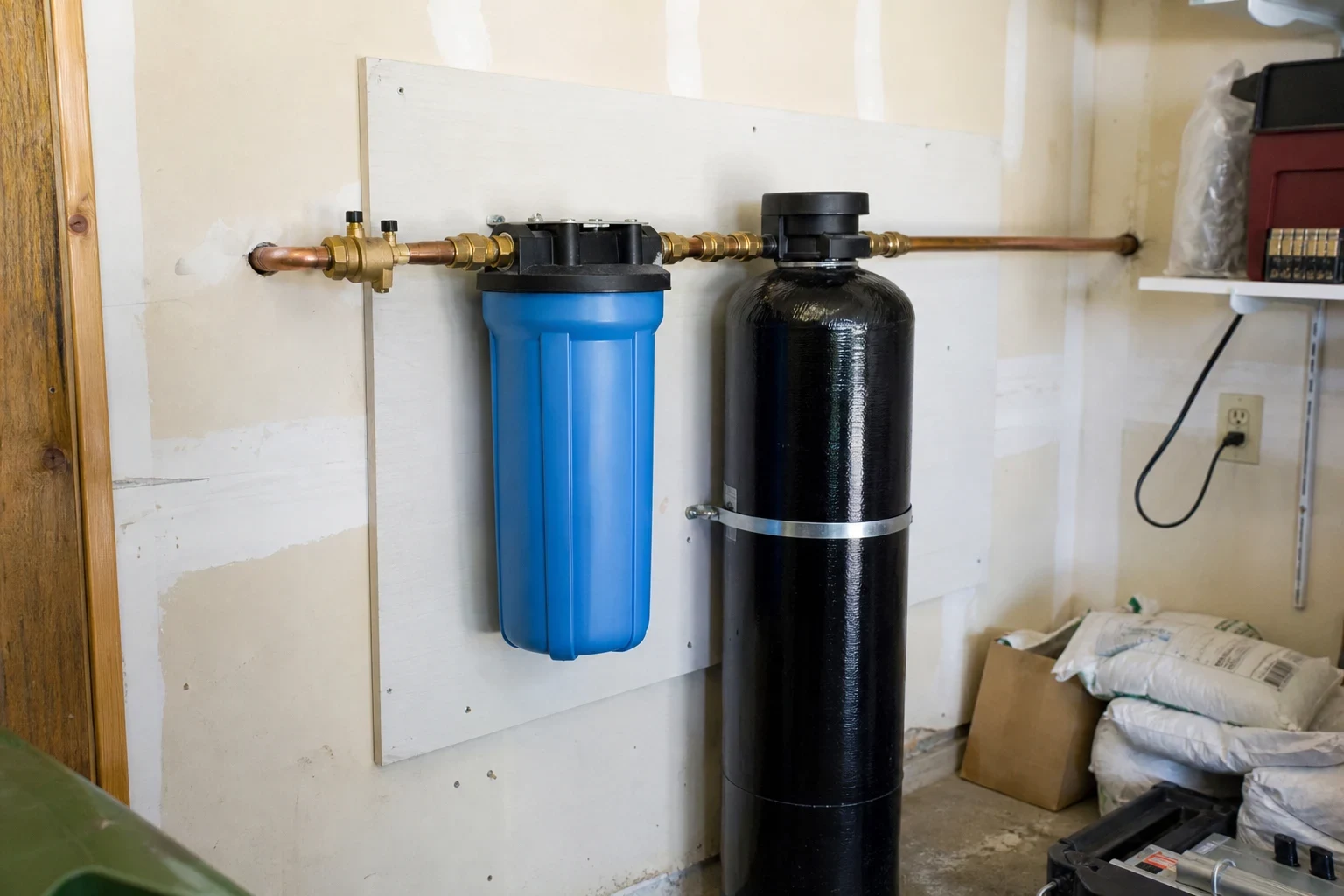
We put the filtration at the point where water comes into your home, so every tap, shower and appliance draws from the cleaner supply. A sediment stage holds back particles. When a test finds dissolved iron, we add a stage designed to remove it before it stains or builds up.
It also affects running costs. Grit that collects at the bottom of a tank water heater sits between the burner or element and the water, so heating takes longer. Keeping sediment out eases the load on the heater and helps the valves in your washer and dishwasher keep a good seal.
What the work includes
- A test before any equipment
- We check for iron, sediment and related readings like pH and hardness. The results decide what we recommend, and you see them too. If you want a deeper look first, our water testing service covers more.
- Sizing to your water use
- We look at your household size, number of bathrooms and water pressure. An undersized filter clogs fast and drops your shower pressure, so we size it to keep flow steady.
- Main-line installation
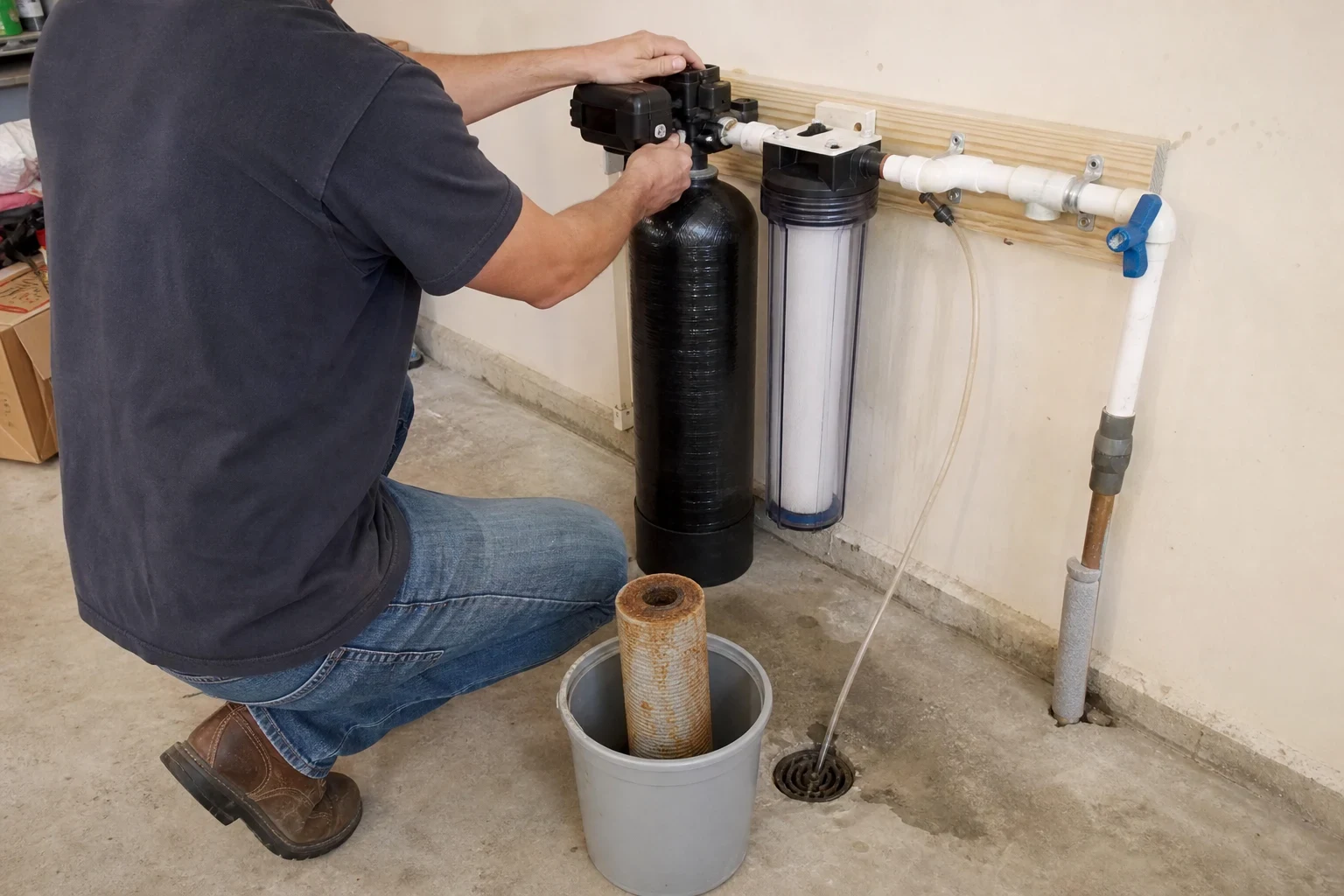
- The filter goes on the incoming line, usually near where water enters the garage or utility area. We add shutoff valves and a bypass so cartridge changes take minutes and you never lose water to the whole house.
- Protecting your space
- We lay down drop cloths, keep the work area tidy and haul away packaging and old fittings when we leave.
- A walk-through of upkeep
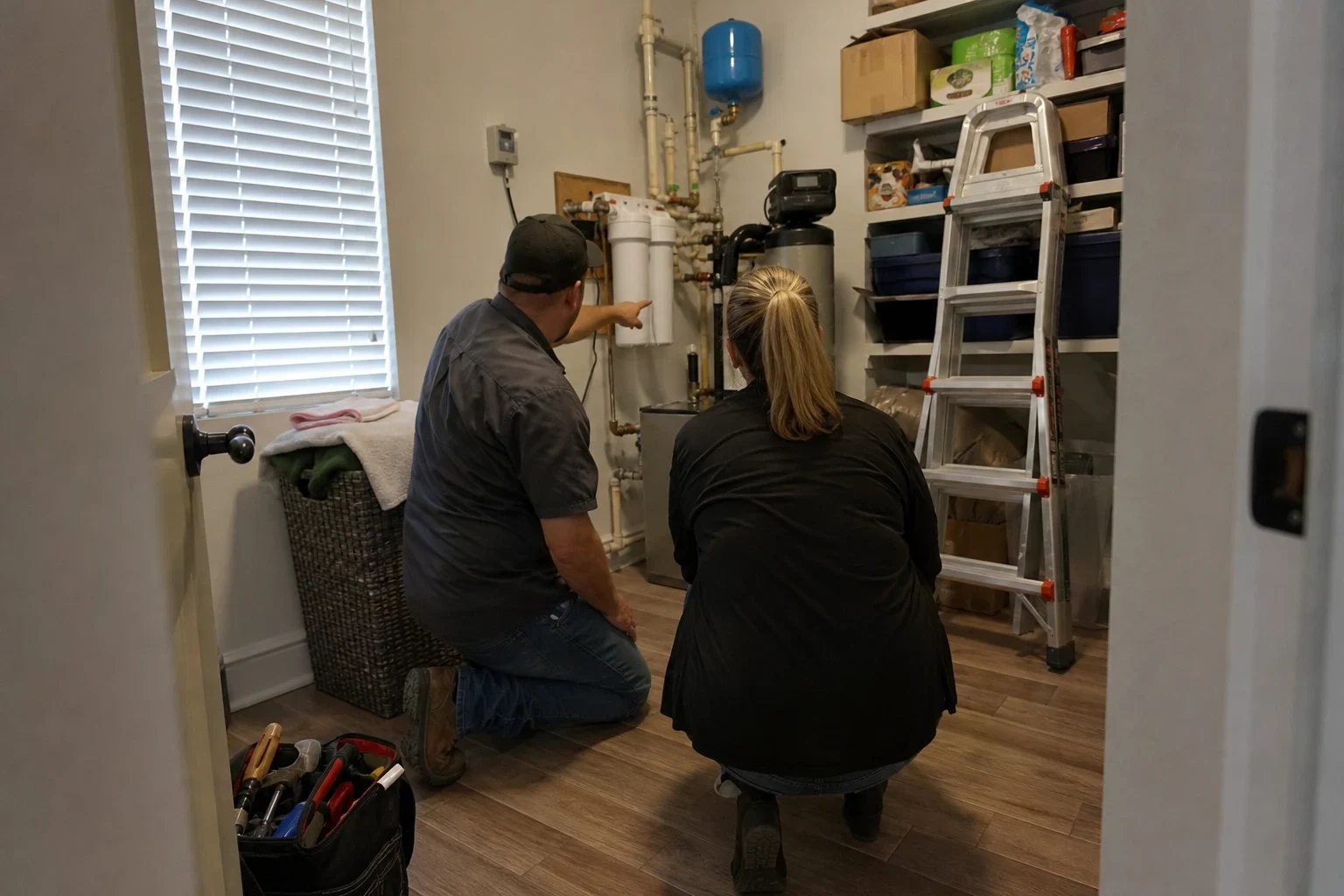
- Before we go, we show you how to read the pressure gauge, when to change the cartridge and what a clogged filter feels like at the tap.
Clues that you need iron or sediment filtration
Rusty stains
Brown or orange rings in sinks, tubs and toilets, or laundry turning yellow, usually mean iron. Scrubbing clears it for about a week before it returns.
Grit in faucet screens
Unscrew the small screen on a kitchen faucet and check it. Sand, silt or black specks there mean particles are already traveling through your pipes. A faucet that gradually loses flow is often the first sign.
A water heater that rumbles
Crackling or knocking from the tank as it heats usually means sediment has settled on the bottom. Heat has to get through that layer, so the burner or element runs longer for the same shower.
Tinted or cloudy water after line repairs
Brown or cloudy water after work on nearby lines can be sediment that got stirred up. If it keeps recurring, a filter stops it before it moves through your plumbing.
Water that tastes like metal
Iron leaves a metallic note in coffee, tea and plain water, even when the glass looks clear.
What affects the cost
The number depends on what testing finds and where your main line runs. Catching loose grit takes far less equipment than removing dissolved iron. Every part and labor item goes on a written estimate, so you see the total before we start.
Iron level and type
Particle iron can often be caught by a good sediment stage. Dissolved iron needs dedicated media, which adds equipment and cost.
Flow and home size
More bathrooms and higher water use call for a larger housing or tank so pressure does not drop.
Plumbing access
A main line sitting out in the open in the garage takes less labor than one hidden inside a finished wall or squeezed into a cramped closet.
Upkeep over time
Cartridge filters need periodic replacement, while some iron systems clean themselves with a backwash. We explain both so you can weigh upfront cost against ongoing cost.
How the job goes from start to end
- 1
A call first
Tell us what you've noticed and about when it began. We ask a few questions about your house and plumbing, then pick a day and time to come out.
- 2
Testing at your home and an itemized estimate
We test at a kitchen sink or outside spigot and explain the numbers plainly. You then get a written estimate listing every part and labor item, with all the time you need to decide.
- 3
The install
We turn off the main, fit the filter housing with valves and a bypass, turn the water back on and check each joint for leaks. Most jobs take part of a day.
- 4
Flushing and final checks
We flush the new filter, open a few faucets and make sure your pressure is right before we go.
Common questions about iron and sediment filters
Will my shower lose pressure with the filter?
A clean filter sized for your home shouldn't change anything you can feel. As the cartridge fills with grit, flow tapers off, which tells you it's time for a new one. We pick a housing big enough that changes happen on a reasonable schedule, not every few weeks.
Is iron in the water bad for my health?
At typical household levels, iron is mostly a problem for stains, taste and plumbing. The aim is cleaner fixtures, better taste and less buildup in appliances. For other worries, our water testing service can look further.
Can this take the place of a water softener?
No. Softeners treat calcium and magnesium hardness, and this filtration treats iron and particles. We recommend a softener only when a hardness test backs it up, and plenty of homes need just one of the two.
How often will I change the filters?
It depends on how much grit is in your water and how much water your family uses. Many homes go a few months per cartridge, and the gauge on the housing shows when one is full. If you'd rather not track it, our filter replacement and maintenance service can handle it.
Is tap water still fine to drink after filtering?
Yes. This filtration removes iron and particles and adds nothing. For extra treatment of drinking and cooking water, under-sink reverse osmosis works well alongside it.
Ready for cleaner fixtures and an easier-running water heater?
Tell us what you are seeing at the tap. We will set up a test, explain what we find and give you a written estimate before any work begins.